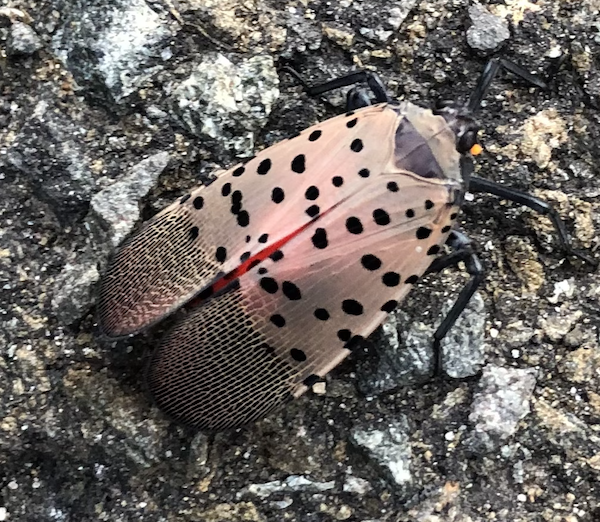
 Today I saw something that I hoped I would never see, the dreaded spotted lanternfly. I’d heard about them on the news nearly a month ago, and with my love of the great outdoors and the hours I spend in my gardens, I am hyper-aware of insects of all kinds and the dangers they pose to my plants and trees.
The fly was on a sidewalk near a building in the 515-517 Boston Post Road area bordering on the backside of Drummond Road.
Remembering what the DEEP instructed Nutmeggers to do if they see one, I took a photo, then assumed full assassin mode and attempted to murder the pretty little destructor. Unfortunately, like a runaway puppy, the fly let me get close enough (to crush it), then it repeatedly flew just out of reach. Needless to say, I failed to kill the lanternfly because there weren’t enough hours in the day to chase after it. But, once I returned home I went on the DEEP website and filled out an incident report, attaching the photo and information that others had been seen in that area.
So what’s the big deal? Here you go, fresh off the DEEP website:
 What is the spotted lanternfly?
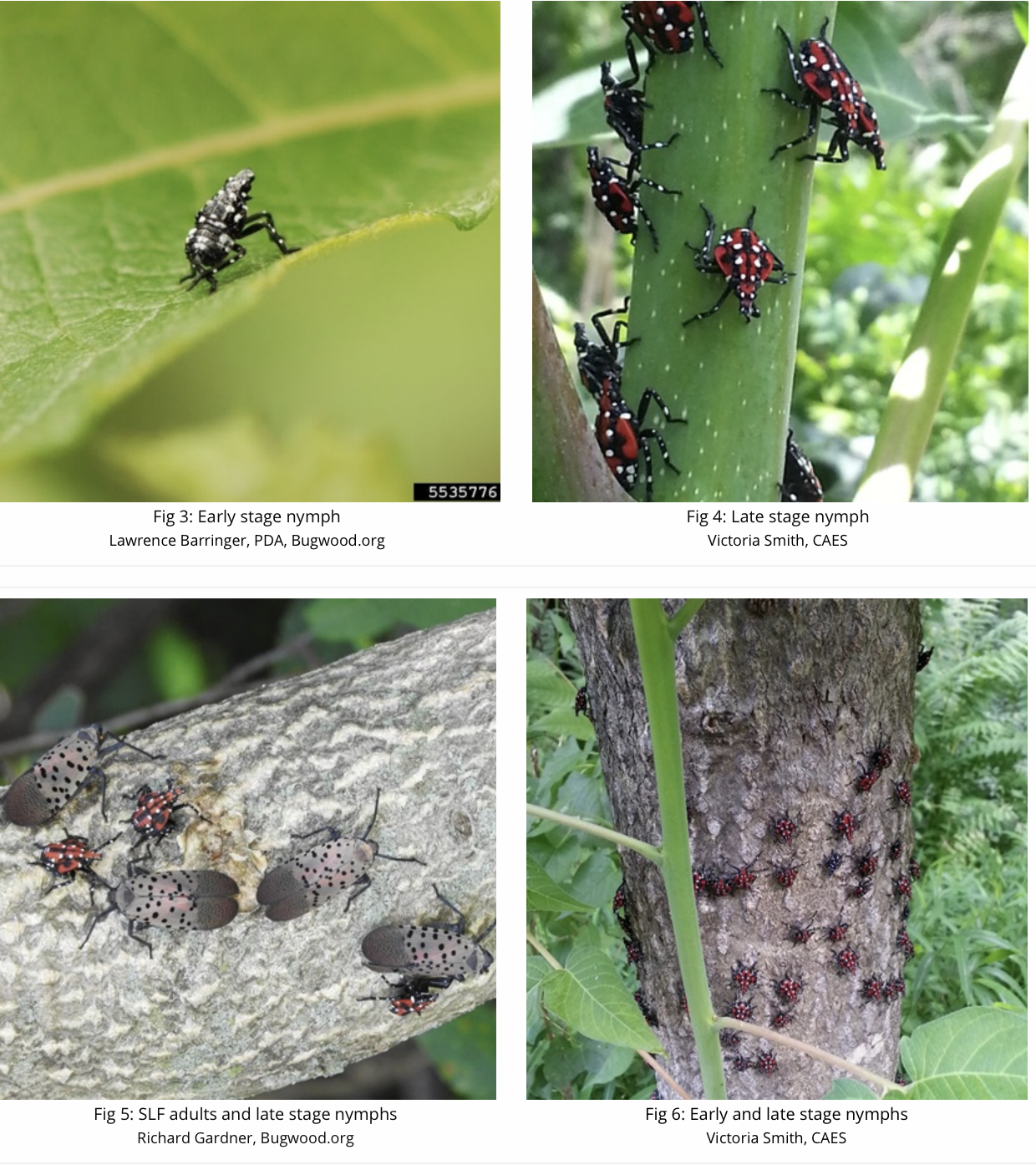
The spotted lanternfly Lycorma delicatula, (SLF) was first found in North America in Pennsylvania in late 2014. It is an exotic, invasive sap-feeding planthopper that has the potential to severely impact Connecticut’s agricultural crops, particularly apples, grapes, and hops, and ornamental trees. Spotted lanternfly adults feed on more than 70 species of plants. Its preferred host tree-of-heaven (Ailanthus altissima) is highly invasive and is abundant along highways, in urban areas, and along the edges of agricultural and industrial areas, where the spotted lanternfly could easily become established.
Why is it so important to stop an SLF invasion?
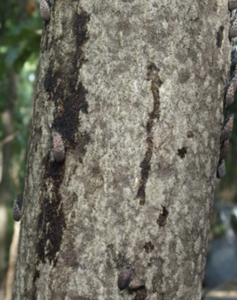
Approximately half of Connecticut’s trees are threatened by spotted lanternfly invasion according to data from Connecticut’s Department of Energy and Environmental Protection (DEEP). As spotted lanternfly nymphs and adults feed on the sap from trees and vines, the entire plant can become weakened because it cannot conduct photosynthesis as effectively. The excretions from these leaf-hopping insects encourage the growth of black sooty mold, thereby reducing photosynthesis. Agricultural crops will have reduced yields due to SLF feeding on fruit and generally weakening plants, if not completely destroying them (DEEP, 2020).
What should citizens do if they see a spotted lanternfly?
The public is urged to report potential sightings of this invasive pest. If you suspect you have found an SLF, snap a picture of it and fill out our reporting form by clicking this link: SLF Reporting Form. Permission by residents and businesses for state and federal plant inspectors to examine host trees on private property will be helpful in determining the extent of the infestation. All reports are confidential.
Protect Connecticut from these nasty little bugs, pay attention, and do your part.