
What are those cute little black and white spotted bugs you’re seeing in your mulch piles and climbing on trees?
#1, they are NOT cute
#2, they are the infant stage of one of the most destructive bugs in the US today.
#3, don’t admire it, KILL IT immediately before it gets the chance to mature.
 What is the spotted lanternfly?
The spotted lanternfly Lycorma delicatula (SLF) was first found in North America in Pennsylvania in late 2014. It is an exotic, invasive sap-feeding planthopper that has the potential to severely impact Connecticut’s agricultural crops, particularly apples, grapes, hops, and ornamental trees.
Spotted lanternfly adults feed on more than 70 species of plants. Its preferred host tree-of-heaven (Ailanthus altissima) is highly invasive and is abundant along highways, in urban areas, and along the edges of agricultural and industrial areas, where the spotted lanternfly could easily become established.
Why is it so important to stop an SLF invasion?
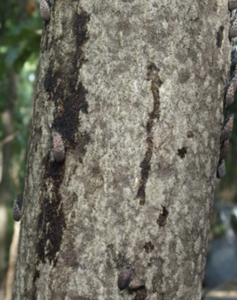
Approximately half of Connecticut’s trees are threatened by the spotted lanternfly invasion, according to data from Connecticut’s Department of Energy and Environmental Protection (DEEP). As spotted lanternfly nymphs and adults feed on the sap from trees and vines, the entire plant can become weakened because it cannot conduct photosynthesis as effectively. The excretions from these leaf-hopping insects encourage the growth of black sooty mold, thereby reducing photosynthesis. Agricultural crops will have reduced yields due to SLF feeding on fruit and generally weakening plants, if not completely destroying them (DEEP, 2020).
What should citizens do if they see a spotted lanternfly?
The public is urged to report potential sightings of this invasive pest. If you suspect you have found an SLF, snap a picture of it and fill out our reporting form by clicking this link: SLF Reporting Form. Permission by residents and businesses for state and federal plant inspectors to examine host trees on private property will be helpful in determining the extent of the infestation. All reports are confidential.
Protect Connecticut from these nasty little bugs, pay attention, and do your part.
