

Shoveling Safely Tips
- Do yourself a favor before the storm begins – apply deicer or rock salt to your sidewalk and steps. This will make clearing snow and ice easier after the storm ends. The District Snow Team uses pet-friendly deicer on its pedestrian bridges.
- The National Safety Council recommends the following tips to shovel safely:
- Do not shovel after eating or while smoking
- Take it slow and stretch before you begin
- Shovel only fresh, powdery snow; it’s lighter
- Push the snow rather than lift it
- If you lift snow, use a small shovel or only partially fill the shovel
- Lift with your legs, not your back
- Do not work to the point of exhaustion
- Know the signs of a heart attack, stop immediately, and call 911 if you experience any of them. Every minute counts.*
- Don’t pick up that shovel without a doctor’s permission if you have a history of heart disease. A clear driveway is not worth your life.
- Clear catch basins and fire hydrants.
- Please do not put snow in the street. Put all cleared snow, from parked cars and sidewalks, in the “tree box,” front yard, or between the curb and sidewalk.
*Signs of a heart attack from the American Heart Association website:
- “It’s important to know that every heart attack can be different. However, most heart attacks start slowly, with mild pain or discomfort in the chest. There may also be discomfort in the arms, back, neck, jaw, or stomach. Other symptoms include shortness of breath, nausea, lightheadedness, or breaking out in a cold sweat.”
Winter Storm Tips for Pedestrians
- Dress properly for the weather, including a hat, scarf, coat, gloves, socks, and water-resistant shoes or boots.
- Watch where you are going. Pay attention to traffic and traffic signals. Leave your phone in your pocket.
- When walking at night, wear outer clothing that contrasts with the white snow.
- When walking during the day, wear sunglasses to protect your eyes from glare.
- Give yourself plenty of time to get where you are going.
Pet Safety
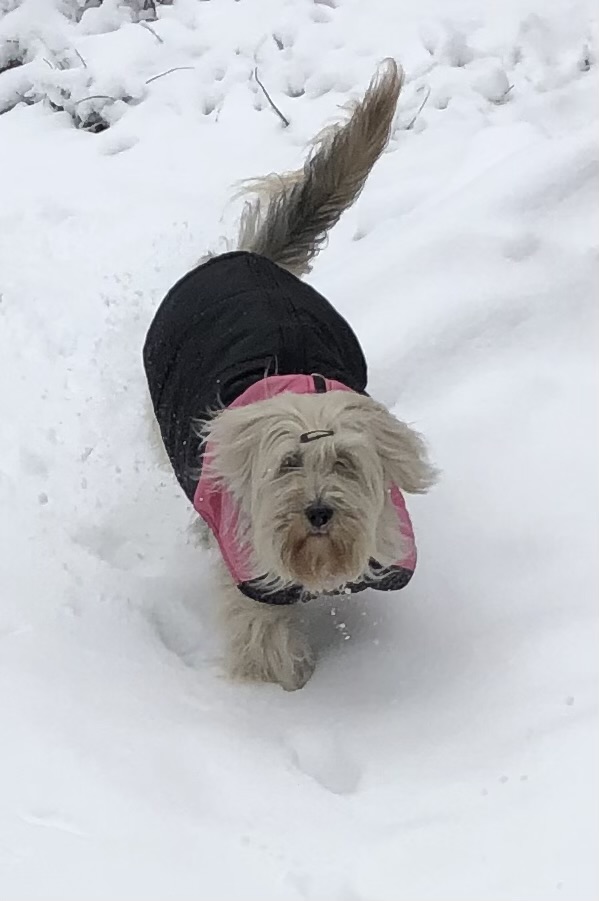
- Bring pets inside: If possible, keep pets inside during cold weather.
- Provide shelter: If pets must stay outside, provide a dry, draft-free shelter.
- Check for hypothermia: Look for signs of hypothermia like shivering, whining, or weakness.
- Protect paws: Salt and other chemicals used to melt snow can irritate a pet’s paws. Trim hair on a dog’s feet to prevent ice balls from forming.
- Provide fresh water: Make sure pets have access to fresh, unfrozen water. Use plastic bowls to prevent their tongue from freezing.
For Older Folks Like Me
Editor’s note: In August I took a bad fall and injured my knee and elbow. Since then, I’ve been wearing supportive braces on each when I do anything stenuous or walk for long distances with my dog.
I’m pushing 70, and have underlying health issues, so, when shoveling snow I set an alarm on my phone that gives me a 20-minute warning, at which time I go inside the house and take a brief break. I have a variety of snowboots with different treads for any conditions.
While my financially secure neighbor hires someone to clear her drive and sidewalk, I’ve done the work myself for decades. I have snow shovels, but I love my battery operated snow thrower, it makes things so easy. I help my two sweet neighbors to the right whenever I can and they do the same for me.
I make sure to cover the windshield and back window of my SUV before the first snowflake falls, so I just pull them off, with no scraping necessary. I also have a great soft rubber snow pusher with expandable handle for effortlessly cleaning off the roof and hood.