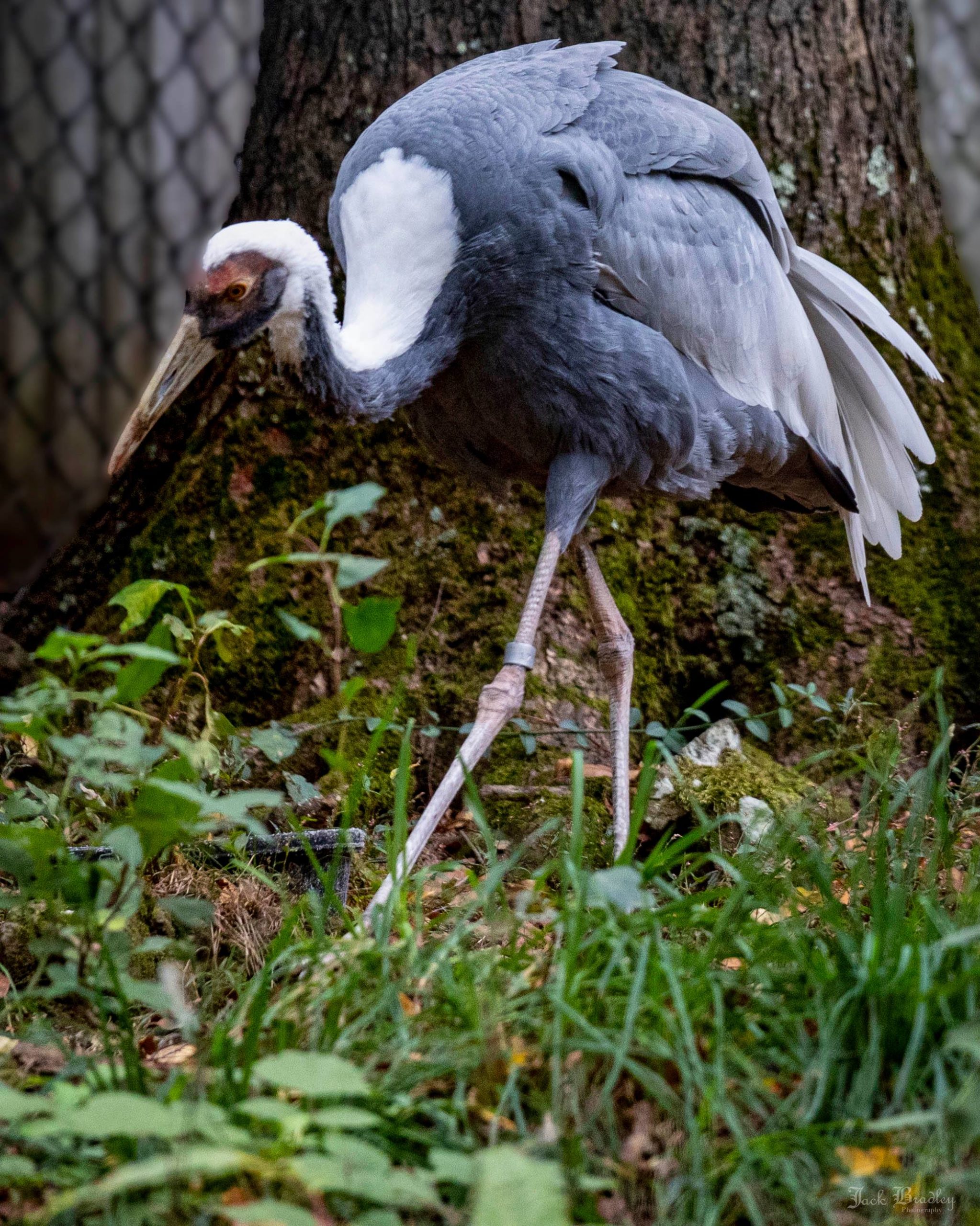
Some birds are born famous, some achieve fame, and some have fame thrust upon ‘em. Cora, a white-naped crane chick who
arrived at Connecticut’s Beardsley Zoo from the Bronx Zoo in January 2020, had fame in her future.
Hatched at the Bronx Zoo in 2020, Cora’s story from birth was filmed as part of a segment for the fifth season of Animal Planet’s THE ZOO, the series which showcases the hard work and heartwarming moments of daily life at the Bronx Zoo and its sister parks across New York City. When Cora was selected to be a companion for the Beardsley Zoo’s male crane McDuffy, her transfer was arranged with a film crew by her side.
Her arrival as a seven-month-old crane with juvenile plumage went smoothly, and due to her
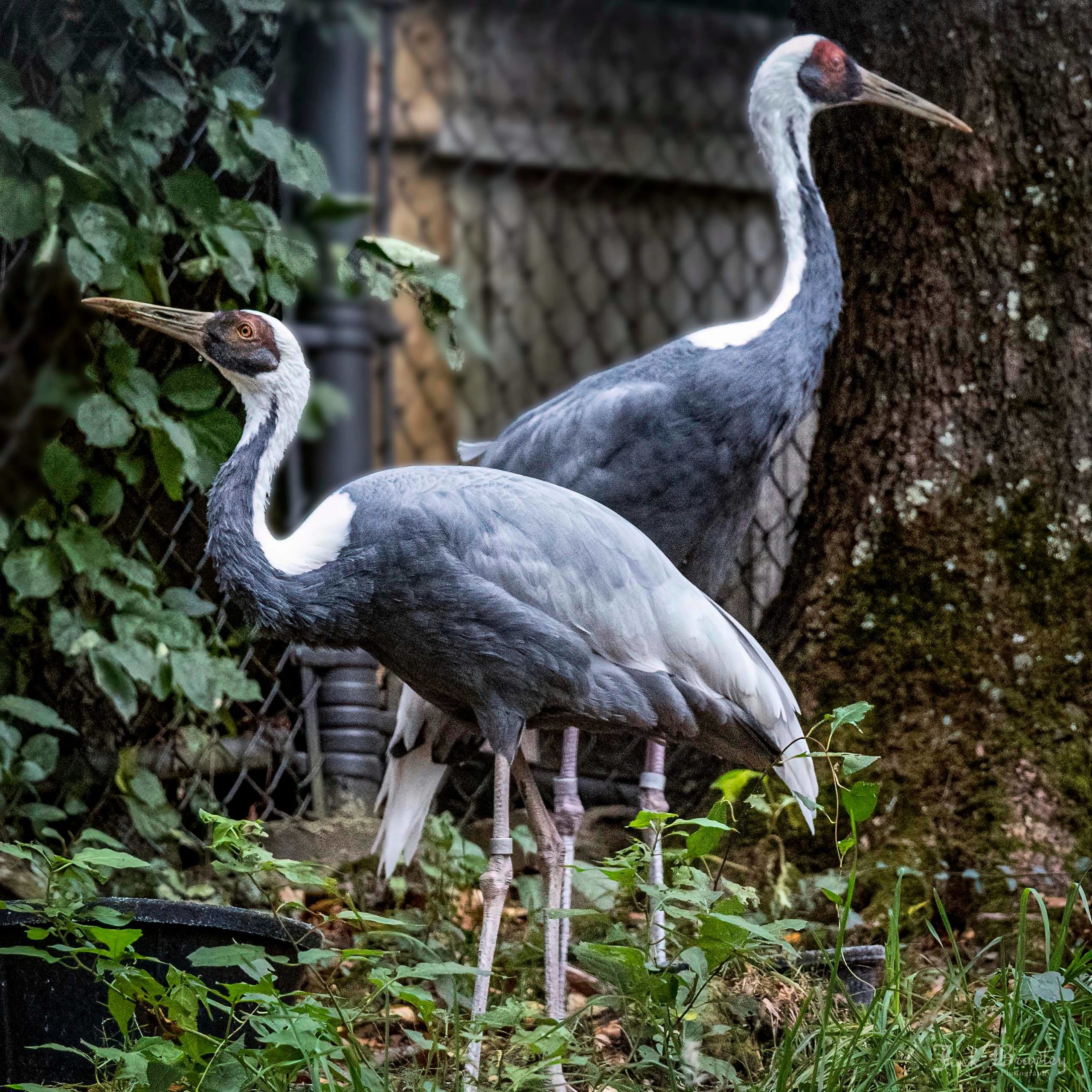
age, her full introduction to the Zoo’s male crane was delayed until summer, 2021. Today guests can see both white-naped cranes in the large grassy habitat next to the red pandas.
Season Five of THE ZOO premiered on Animal Planet on Saturday, October 9, 2021.
The white-naped crane episode featuring Cora will air on Saturday, October 30 at 9 PM. Fans can also follow the conversation on social media #TheZoo and follow Animal Planet on Facebook, Twitter, and Instagram for more updates.
Click HERE to watch a clip of a teaser for Saturday’s show.
Zoo Director Gregg Dancho said, “Cora is a beautiful new addition and contributes to the Zoo’s demonstration of the rich biodiversity in nature. We continually look for new and unusual species to educate and delight our guests that also meet our mission of wildlife conservation.”
There are an estimated 5,000 white-naped cranes living in the wild, and the species is listed as vulnerable by the International Union for Conservation of Nature (IUCN).
About White-Naped Cranes
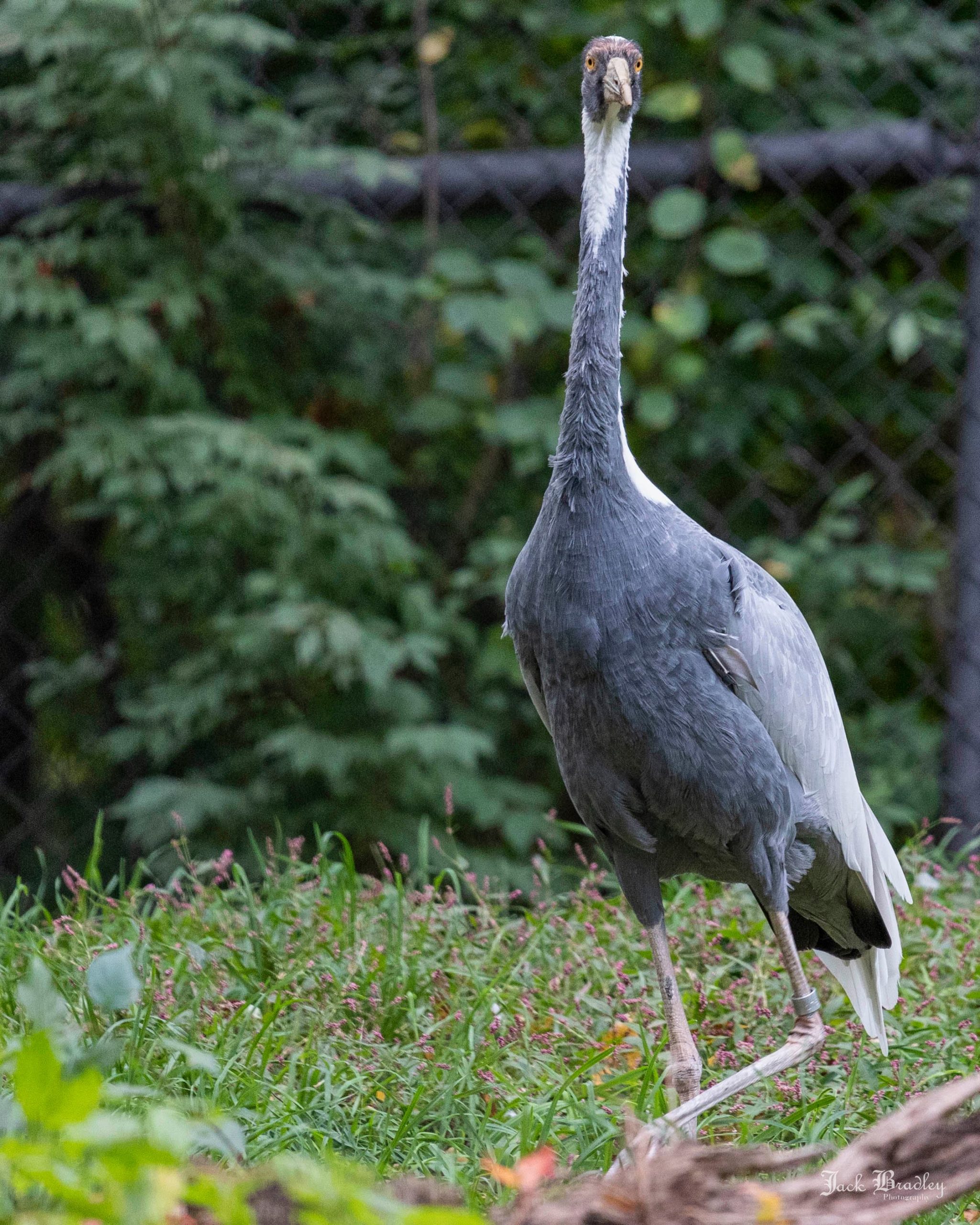
White-naped cranes are an elegant species native to northern Mongolia, southern Siberia, Korea, Japan, and central China. They have a white nape and vertical gray stripes on their necks, as well as a distinct red patch surrounding their eyes. They are found in in grassy marshes, wet sedge meadows and reed beds in broad river valleys,
lake depressions and boggy upland wetlands. They prefer areas where their nests can be concealed and there is little grazing pressure.
Habitat destruction of wetlands due to agricultural expansion, as well as hunting, pose the most critical threat to their survival. Since 1994, AZA institutions have been sending surplus White-naped crane eggs to Russia to be reared and released to the wild. Currently, the International Crane Foundation is also involved in the conservation of White-naped cranes throughout their range in eastern Asia.
About Connecticut’s Beardsley Zoo
Let your curiosity run wild! Connecticut’s only zoo, celebrating its 99th year, features 350 animals representing primarily North and South American and Northern Asian species. Guests won’t want to miss our Amur tigers and leopards, maned wolves, Mexican gray wolves, and red wolves. Other highlights include our new Spider
Monkey Habitat, the Rainforest Building, the prairie dog exhibit, and the Pampas Plain with Giant anteaters and Chacoan peccaries. Guests can ride on the carousel, grab a bite from the Peacock Café and eat in the Picnic Grove. Connecticut’s
Beardsley Zoo is a non-profit organization approaching its 100 th year at a time when the mission of helping fragile wildlife populations and eco-systems is more important than ever.
Tickets must be purchased on the Zoo’s website at beardsleyzoo.org. In accordance with the state of Connecticut COVID-19 guidelines: we recommend that guests continue to wear masks while visiting the Zoo, but when guests are outside and can
maintain social distance, masks may be removed. In any indoor area, or when social distancing cannot be maintained, masks are required. Everyone over the age of two, with the exception of those with medical conditions that preclude wearing them, should have a mask available.
